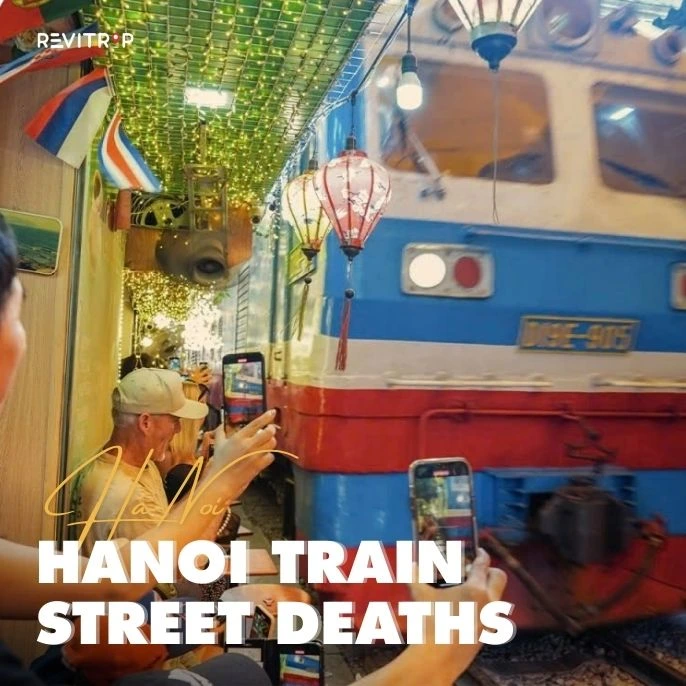
How many people have died on Hanoi Train Street? Public reporting reviewed by Revitrip does not provide a complete official death toll, and we could not verify a confirmed tourist fatality as of July 2026. That does not make the attraction safe. Documented accidents and dangerous near-misses have occurred, while Hanoi authorities continue to restrict tours and enforce railway-safety rules.
This guide separates what is confirmed from what remains unverified, then explains the documented incidents, current restrictions, and safer ways to plan your Hanoi visit.
Train Street Hanoi Safety Reality
Verified tourist fatalities: No confirmed tourist fatality was found in the public reports reviewed. However, no complete official public death-toll database is available.
Documented accidents: Public reporting has recorded visitors being struck by trains or narrowly avoiding collisions at Hanoi Train Street.
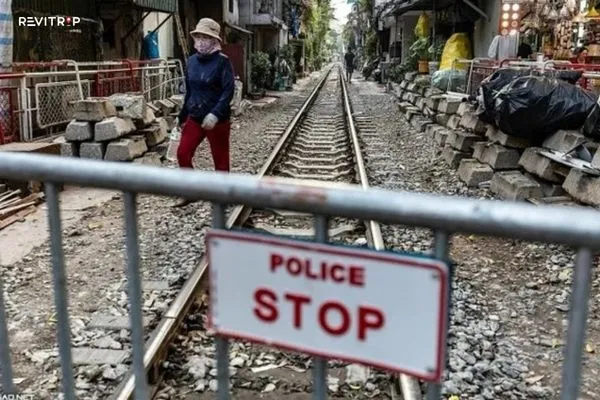
Official position: Hanoi continues to restrict tourism activities, inspect trackside businesses, and enforce railway-safety regulations.
Current status: Access may be restricted or changed without notice, depending on local enforcement and safety conditions.
Bottom line: The absence of a verified tourist fatality does not mean Hanoi Train Street is safe.
Continue reading: Documented accidents → current restrictions → should you visit?
If you are planning your itinerary, consider reading our guide to Hoa Lo Prison or Vietnam Women’s Museum both safer and more meaningful cultural experiences in the city.
Hanoi Train Street Accidents: What Has Been Documented
Public reporting provides clearer evidence of accidents and dangerous near-misses at Hanoi Train Street than it does of a complete official death toll. These incidents help explain why local authorities continue to restrict access, monitor the railway corridor, and discourage tourism activities around the tracks.
A Tourist Was Struck by a Train in 2022
In September 2022, a South Korean tourist entered the railway area to take photographs and was struck by a passing train near the Train Street café zone. The impact reportedly threw the tourist against a wall.
The visitor survived and was able to leave the scene with minor injuries. However, the incident showed how quickly a photo opportunity can become dangerous when someone enters an active railway corridor or misjudges the distance from an approaching train.
A Near-Miss Was Captured on Video in 2024
In June 2024, another widely shared video showed a female tourist stepping onto the tracks to pose for a photograph as a train approached. A nearby man rushed toward her and moved her back onto the sidewalk moments before the train passed.
Local authorities later confirmed that the incident occurred in the Train Street area. Officials ordered further inspections, increased monitoring, and reinforced restrictions against tourists taking photographs inside the railway safety corridor.
What These Incidents Show
The documented cases share a similar pattern: visitors move onto or too close to the tracks because they are focused on taking photos or recording videos.
The main risks include:
- Misjudging how quickly the train is approaching
- Standing inside the active railway safety corridor
- Becoming distracted while filming or posing
- Relying on café staff or bystanders to give a last-second warning
- Having limited space to move when the area is crowded
In several reported incidents, visitors avoided more serious injuries because another person intervened or because the collision did not prove fatal. That outcome should not be treated as evidence that the attraction is safe. Later reporting has continued to describe close calls, unsafe café setups, and authorities investigating potential railway-safety violations.
This is why the absence of a confirmed tourist death toll does not provide a reliable measure of the actual risk.
Why Zero Deaths Doesn’t Mean “Safe”
Understanding the Statistics
1. Train speed is extremely slow (5-10 km/h)
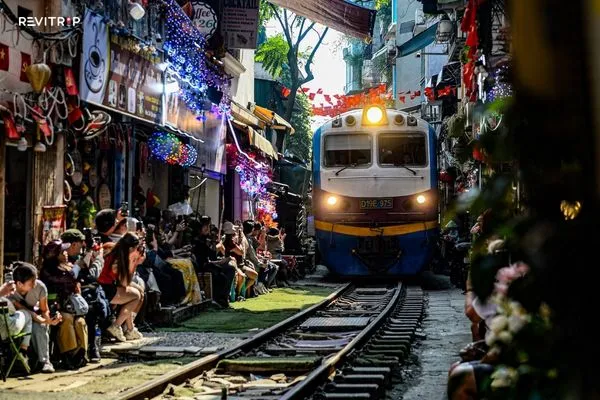
- Trains crawl through the alley, not rush
- Slow enough for people to jump away if alert
- Slow enough to stop if emergency occurs
2. Locals actively protect tourists
- Cafe owners pull people back from tracks
- Residents shout warnings in English
- Community watches out for oblivious tourists
3. Trains are predictable
- Scheduled times (though often delayed)
- Horn blaring before entering alley
- Visible from distance (narrow alley, long sightlines)
4. Selection bias
- People who ignore warnings don’t survive to report
- Near-misses vastly outnumber actual collisions
- We only avoid deaths through constant vigilance
Documented Injuries and Near-Misses
While deaths haven’t occurred, injuries happen regularly:
Confirmed injury types:
- Falls while jumping away: Twisted ankles, scraped knees, bruised limbs
- Collision with furniture: Cafe chairs/tables hit by train, striking tourists
- Trampling during panic: Crowds rushing away, people knocked down
- Minor train contact: Backpacks clipped by train, shoulders brushed
- Psychological trauma: Severe fright, panic attacks after near-misses
Unreported incidents: Most minor injuries go unreported. Tourists don’t file police reports for scraped knees or bruises. Therefore, actual incident numbers are higher than official statistics.
Video evidence: YouTube and TikTok have hundreds of near-miss clips. Tourists jump away at the last second. They stumble and look shocked. These aren’t staged, they show genuine close calls.
The Real Dangers at Train Street Hanoi
1. The Obvious Danger: The Train Itself
Physical risks:
- Train passes within 30-60 cm of standing tourists
- No safety barriers or platforms
- Tracks at ground level (easy to step onto)
- Train cannot stop quickly even at slow speed
Human factors:
- Tourists distracted by phones/cameras
- Alcohol consumption at cafes (impaired judgment)
- Competitive photo-taking (increasingly risky poses)
- False sense of security (others doing it = must be safe)
Why it’s dangerous: A 50-ton train moving even 10 km/h delivers massive force. If a train clips you or you fall under its wheels, you could suffer serious injury or death even at low speed.
2. The Panic Factor
What happens when train arrives:
- Cafe staff shout warnings
- 50-100 tourists simultaneously flee tracks
- Chaotic rushing in narrow space
- People bump, push, stumble
- Weak or slow individuals knocked down
- Risk of trampling in panic
3. The Overconfidence Danger
Psychology of repeated exposure:
- First visit: Nervous, cautious, respectful
- Second visit: “I know what I’m doing now”
- Third visit: Overconfident, taking more risks
- Eventually: Accident from complacency
The Instagram escalation:
- Initial photo: Standing safely beside tracks
- Next photo: Standing closer for better shot
- Next: Touching train as it passes
- Next: Jumping onto tracks at last second
- Each iteration increases risk for better content
Real example: The 2025 near-death incident involved a tourist who had visited Train Street previously. Overconfidence from successful first visit led to riskier second visit.
4. The Structural Dangers
Beyond the train:
- Uneven ground (trip hazards)
- Electrical wires overhead (electrocution risk)
- Unstable furniture (chairs near tracks)
- Narrow escape routes (bottlenecks during panic)
- No emergency services nearby
Why the Vietnamese Government Keeps Trying to Close It
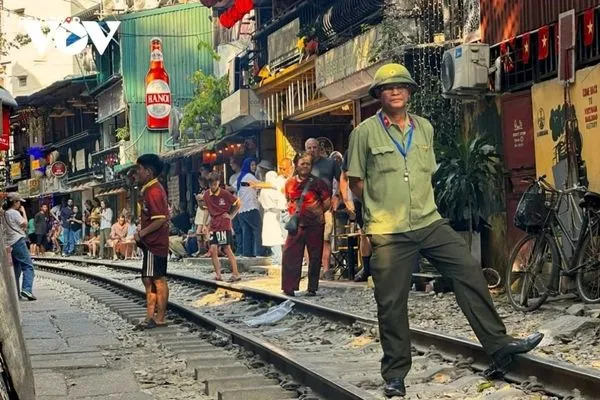
2019 – First Major Closure:
- Triggered by overcrowding and safety complaints
- Security guards stationed at entrances
- Cafes ordered to close
- Lasted approximately 6 months
- Gradually reopened through enforcement lapses
2022 – Second Closure Attempt:
- Renewed safety concerns
- Barricades erected
- More persistent than 2019
- Tourists climbed over barricades anyway
- Eventually enforcement relaxed
2025 – Current Crackdown:
- Triggered by near-death incident
- Stricter cafe licensing
- Irregular police sweeps
- Unpredictable access (sometimes open, sometimes closed)
- Ongoing as of February 2026
Why closures fail: Economic pressure from local businesses, tourist demand, enforcement costs, lack of political will for permanent closure.
Government’s Stated Concerns
Official reasons for closure attempts:
1. Public safety:
- Risk of tourist deaths/injuries
- Liability concerns
- Emergency response difficulties
2. Railway operations:
- Tourists obstructing tracks
- Train delays from clearing crowds
- Operational disruptions
3. Residential disruption:
- Locals can’t access homes
- Privacy invaded by constant tourists
- Noise, litter, disturbance
4. National image:
- Potential international incident if tourist dies
- Vietnam portrayed as unsafe destination
- Negative publicity from accidents
The Ethical Question: Should Train Street Exist?
Arguments for Keeping It Open
Economic benefits:
- Provides income for local families
- Created cafe/tourism economy from slum area
- Supports community that had few opportunities
Cultural value:
- Shows real Hanoi life (not sanitized tourism)
- Preserves working railway neighborhood
- Demonstrates Vietnamese adaptability
Tourist demand:
- People want to visit (100,000+ Instagram posts)
- Part of Hanoi’s identity now
- Closing it doesn’t eliminate risk (people sneak in anyway)
Arguments for Permanent Closure
Safety imperative:
- Eventually someone will die
- Injuries happen regularly already
- No amount of economic benefit justifies death risk
Residents’ rights:
- Locals deserve privacy and peace
- Not fair to turn residential area into zoo
- Quality of life severely impacted
Government liability:
- When death occurs, massive legal/political problems
- International incident potential
- Better to close now than after tragedy
My Honest Recommendation
Based on researching “how many people die on Train Street Hanoi”:
Skip Train Street entirely. Not because it’s definitely going to kill you (it probably won’t), but because:
- Risk-reward ratio is terrible: Risking injury/death for 30-second train passing and Instagram photo isn’t worth it
- Better alternatives exist: Long Bien Bridge, murals, other Hanoi experiences provide better value without risk
- Ethical concerns: Contributing to situation that will eventually cause death isn’t responsible tourism
- Unpredictable access: Often closed anyway might waste trip finding it barricaded
If you’re exploring Hanoi, better viewpoints exist. See our full guide to Hanoi
Final Thoughts: The Answer to “How Many People Die on Train Street Hanoi”
The answer “zero deaths so far” is statistically accurate but ethically misleading.
Zero deaths doesn’t mean safe. It means lucky.
Every safety expert, every government official, every local resident knows: Train Street is dangerous. The only debate is whether that danger is acceptable.
My answer: No, it’s not.
When travelers Google “how many people die on Train Street Hanoi,” they’re revealing awareness that something is wrong. They sense the danger. They’re looking for validation or contradiction of their concerns.
Here’s your validation: Your instincts are correct. It IS dangerous.
The better question isn’t “how many have died?” but “why risk being the first?”
Skip Train Street. Visit Long Bien Bridge instead. Get better photos, better experience, zero risk of ending up as the tragedy that finally forces closure.
Sometimes the best travel decision is choosing what NOT to do.
Have you experienced dangerous situations at Train Street? Share your near-miss stories in the comments to help other travelers make informed decisions.
FAQ
Train Street is not officially considered safe. Although no confirmed tourist deaths have occurred, near-miss incidents and minor injuries happen regularly due to crowded conditions and extremely close train passes.
Access is inconsistent. Authorities periodically block entrances and enforce café closures. Some visitors still enter through local businesses, but enforcement can change without notice.
Train schedules vary, but trains usually pass a few times per day, often in the afternoon and evening. Delays are common, so times are not always reliable.