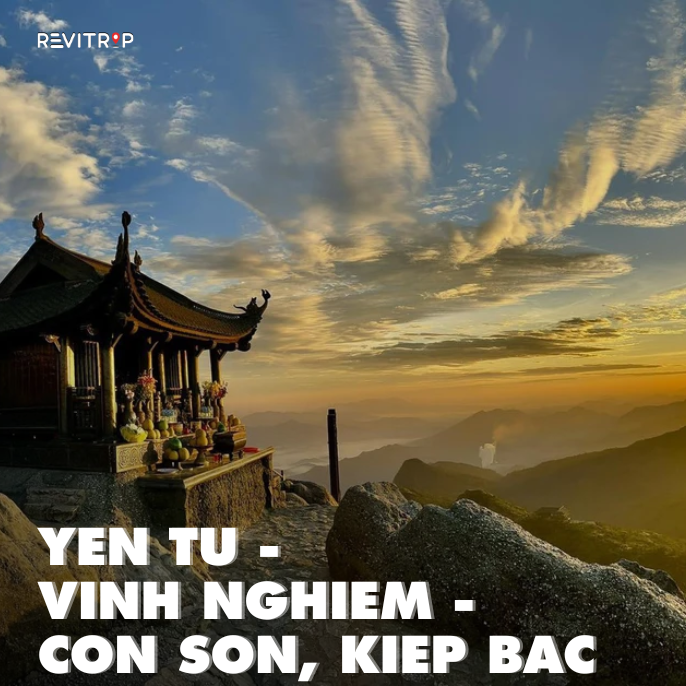
Yen Tu – Vinh Nghiem – Con Son, Kiep Bac opens as a long sacred landscape, shaped by mountain paths, old temples, ritual memory, and the spiritual inheritance of Truc Lam Buddhism. UNESCO inscribed the complex on the World Heritage List in 2025, recognizing a serial property of 12 component sites spread across forested mountains, lowlands, and river valleys. Together, they preserve the birthplace and development of Truc Lam, a Vietnamese Zen tradition closely tied to the Tran dynasty and the cultural life of Dai Viet.
The scale of the heritage matters because its meaning unfolds across distance. The temples, shrines, pilgrimage routes, archaeological remains, and wooded slopes belong to the same cultural rhythm. One place leads into another. One layer of memory carries the next. That is why Yen Tu – Vinh Nghiem – Con Son, Kiep Bac stays with such unusual depth. The heritage here lives in connection, continuity, and spiritual movement through the land.
A landscape shaped by Truc Lam
At the heart of the complex is the story of Truc Lam Buddhism. UNESCO describes the property as the birthplace of this uniquely Vietnamese Zen tradition, rooted in the 13th and 14th centuries and linked to the Tran dynasty. Official Vietnamese tourism materials describe the same landscape as holding the full arc of Truc Lam, from royal renunciation to religious teaching and continuing pilgrimage.
That history gives the complex its quiet force. Truc Lam belongs to the spiritual life of Vietnam, and it also belongs to the country’s historical imagination. The tradition emerged in a period when kingship, ethical thought, and religious life stood close to one another. That closeness still shapes how the landscape is read today. A pagoda here carries more than architecture. A mountain path carries more than scenery. The setting keeps the memory of a Buddhist tradition that grew within Vietnamese history and remained rooted in Vietnamese ground.
The presence of Tran Nhan Tong
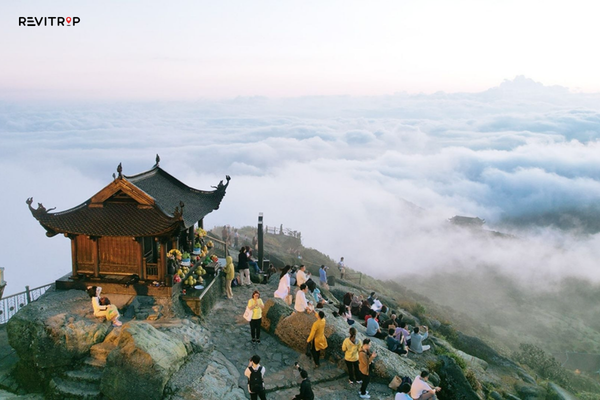
No figure is more central to this heritage than Tran Nhan Tong, the king-monk associated with the founding of Truc Lam. Official tourism materials place Yen Tu within the story of his renunciation of the throne and his monastic life in the mountains. UNESCO likewise situates the complex within the world of the Tran dynasty and the spiritual tradition that emerged there.
That memory has never felt purely historical. It gives Yen Tu a moral and emotional center. The image of a ruler turning toward contemplative life still carries weight because it gathers several strands of Vietnamese thought into one life story: responsibility, restraint, discipline, and spiritual clarity. Across the heritage complex, that story settles into the landscape itself. Temples, towers, and pilgrimage routes hold it quietly, without needing to spell it out.
Thought, text, and living transmission
Vinh Nghiem gives the complex another kind of depth. It keeps one of the most important textual legacies connected to Truc Lam through its collection of more than 3,050 Buddhist woodblocks, recognized in 2012 by UNESCO’s Memory of the World programme for Asia and the Pacific. This matters because Truc Lam was carried forward not only through worship and ritual, but also through copying, carving, preserving, and teaching. The heritage survives in words as much as in stone or timber.
Con Son – Kiep Bac widens the cultural frame again. Official Vietnamese tourism materials connect the area with Huyen Quang, the third patriarch of Truc Lam, and with Nguyen Trai, one of the great literary and historical figures of Vietnam. Those associations show how the complex extends beyond the boundaries of formal religious history. It enters the worlds of scholarship, poetry, memory, and national consciousness.
This breadth helps explain why the complex carries such unusual cultural density. Sacred life, intellectual life, and historical memory were never sealed into separate rooms here. They continued to move alongside one another across centuries, and the landscape kept them in view. That same continuity still matters across other forms of Vietnamese heritage, where memory, performance, and community remain closely connected through living practice.
The meaning of the land itself
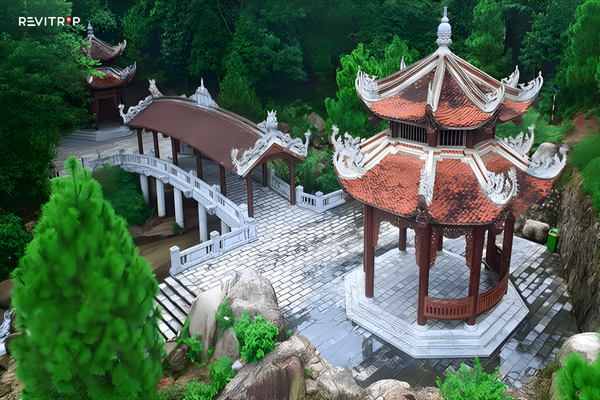
UNESCO describes the property as a coherent whole linking multiple monuments and landscapes. That idea is essential to understanding its heritage value. The mountains, lowlands, and river valleys are not passive surroundings. They shape the spiritual atmosphere of the site and the way its history has been experienced, practiced, and remembered.
Yen Tu especially carries that sense of ascent and inward concentration that mountain Buddhist sites often hold, yet the wider complex never narrows into a single summit. Within Quang Ninh, Yen Tu adds a more contemplative dimension to the province, shaped by mountain pilgrimage and Buddhist memory. Its full meaning stretches across a larger sacred geography. The terrain creates continuity between retreat, learning, ritual, and remembrance. A visitor can sense that the cultural life of the heritage did not arrive after the landscape was formed. It grew with the landscape and stayed attached to it.
That is one reason the complex feels so enduring. Many heritage sites preserve an object, a monument, or a historical episode. Yen Tu – Vinh Nghiem – Con Son, Kiep Bac preserves a spiritual ecology. Belief, place, practice, and memory continue to hold together in one long line.
A living sacred inheritance
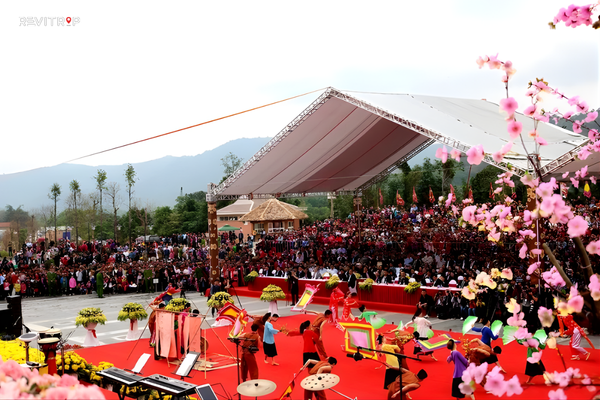
UNESCO still describes the complex as a vibrant pilgrimage destination, and official materials continue to frame it as a living center of spiritual and cultural practice. This ongoing life matters deeply. The heritage remains active through worship, festivals, local belief, and the continued presence of communities who keep its traditions in motion. UNESCO has also stressed that local communities should remain central to conservation because their knowledge, beliefs, and daily practices help keep the site alive.
Like other heritage traditions in Vietnam, the value of Yen Tu does not rest only in what survives physically, but in the cultural memory still moving through the place. That living quality changes the way the complex should be read. It is a place where the past has not withdrawn from the present. The line from Tran Nhan Tong to Truc Lam, from woodblock to teaching, from pilgrimage path to present ritual, still feels continuous. The cultural meaning of Yen Tu – Vinh Nghiem – Con Son, Kiep Bac rests in that continuity. Time gathers here, yet it does not feel sealed away.
Final take
Yen Tu – Vinh Nghiem – Con Son, Kiep Bac holds one of the clearest sacred landscapes in Vietnamese Buddhism. Its mountains, temples, texts, and remembered lives form a heritage that carries both spiritual depth and historical reach. UNESCO’s 2025 inscription recognized those values on a global level, but the deeper strength of the complex lies in the way Truc Lam still lives across the land itself. It remains a place where Vietnamese Buddhism can be understood through atmosphere, memory, and the long patience of the landscape.
FAQ
Yen Tu – Vinh Nghiem – Con Son, Kiep Bac is a UNESCO World Heritage complex in northern Vietnam made up of 12 component sites across mountains, lowlands, and river valleys. It is recognized for its religious, historical, and cultural links to Truc Lam Buddhism and the Tran dynasty.
UNESCO inscribed Yen Tu – Vinh Nghiem – Con Son, Kiep Bac on the World Heritage List in 2025 because it preserves the birthplace and development of Truc Lam Buddhism through a connected sacred landscape of pagodas, temples, shrines, and archaeological remains.
Truc Lam Buddhism is a uniquely Vietnamese Zen tradition founded in the 13th century and closely associated with Yen Tu. UNESCO describes it as a school that helped shape the Dai Viet kingdom, which is why the heritage complex carries both spiritual and historical importance.