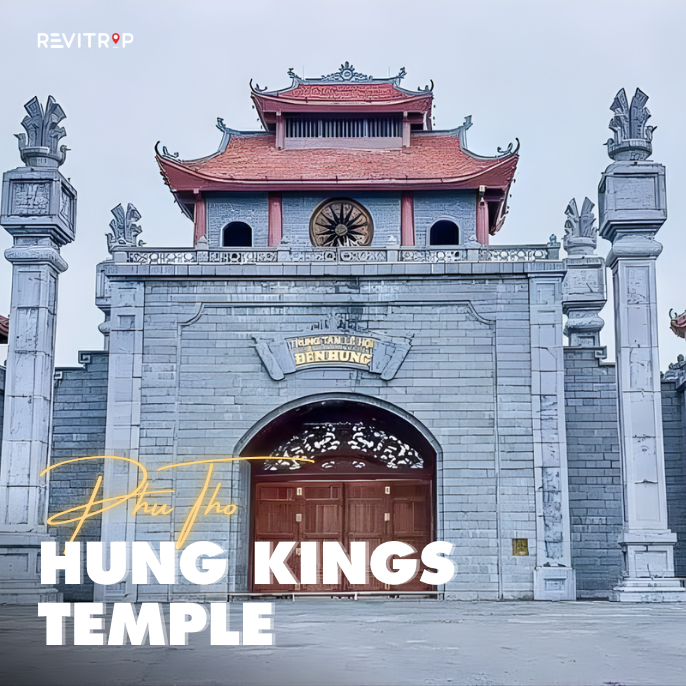
Hung Kings Temple is one of the places where Vietnam’s sense of origin becomes visible. Set on Nghia Linh Mountain in Phu Tho Province, the temple complex is dedicated to the Hung Kings, who are honored as the legendary founders of the Vietnamese nation. For many Vietnamese people, this is not only a historical site. It is a place of memory, gratitude, and return.
For foreign travelers, Hung Kings Temple may not feel immediately obvious in the way Hoi An, Ha Long Bay, or Hue does. Its meaning is quieter and more layered. You come here to understand how Vietnam remembers ancestry, nationhood, and the old idea of “drinking water, remembering its source.” The visit moves through temple gates, stone steps, incense smoke, old trees, and the steady rhythm of people climbing toward the upper shrine.
It is not the easiest heritage site to explain with one photo. That is exactly why it is worth slowing down for. Hung Kings Temple gives travelers a deeper look at Vietnam beyond scenery, food, and city life.
At a Glance
| Item | Details |
|---|---|
| Location | Nghia Linh Mountain, Viet Tri, Phu Tho Province |
| Best for | Cultural travelers, history lovers, spiritual heritage |
| Time needed | Half day on site |
| Heritage type | Intangible cultural heritage linked with ancestral worship |
| Best time to visit | Weekdays for calm, festival season for atmosphere |
| Main festival | Around the 10th day of the third lunar month |
| Travel style | Pilgrimage site, temple complex, cultural day trip |
Where Vietnam Goes to Remember Its Beginning
Hung Kings Temple carries a different kind of importance from many famous attractions in Vietnam. It is not mainly about grand architecture or dramatic views, although the mountain setting is beautiful in its own quiet way. Its real weight comes from what the site represents: the remembered origin of the Vietnamese people.
The temple complex is connected with the Hung Kings, legendary rulers associated with Van Lang, often described as the first state of the Vietnamese nation. Their story sits between history, myth, and cultural memory. In Vietnam, that boundary is not always the most important part. What matters is the act of remembering. People come here to honor the ancestral founders, offer incense, and take part in a tradition that has shaped Vietnamese identity for generations.
This makes Hung Kings Temple a meaningful stop for travelers who want to understand Vietnam with more care. The site does not ask you to know every legend before you arrive. It asks you to move respectfully, notice the rituals around you, and understand that for local visitors, this is a living place rather than a simple sightseeing stop.
Who Were the Hung Kings?
The Hung Kings are remembered as the ancestral rulers who founded Van Lang, the early kingdom linked with the origins of the Vietnamese people. In popular memory, they stand at the beginning of the national story. Their image appears in school lessons, festivals, public ceremonies, family conversations, and cultural traditions.
For foreign visitors, it may help to think of the Hung Kings as both historical and symbolic figures. Their role is not only about ancient politics. It is also about origin, unity, and shared ancestry. This is why their worship remains important across Vietnam, especially in Phu Tho, where the main temple complex stands.
The Vietnamese phrase “uống nước nhớ nguồn” is often used in this context. It means that when you drink water, you remember its source. At Hung Kings Temple, that idea becomes physical. The climb up the mountain, the incense offerings, and the quiet pauses at each temple all point back to the same feeling: gratitude toward those who came before.
What to See at Hung Kings Temple
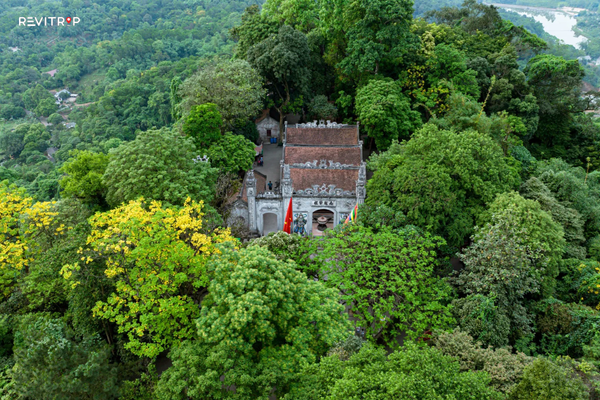
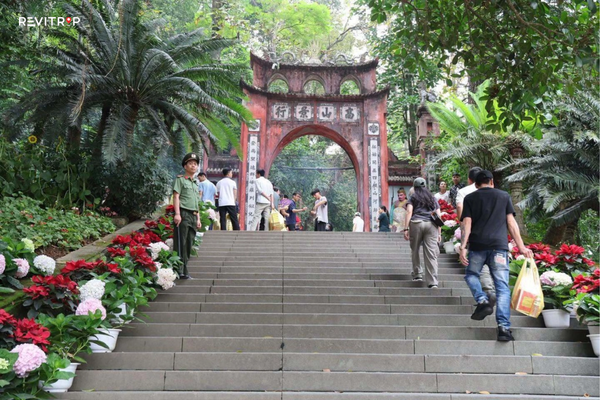
The Hung Kings Temple complex spreads across Nghia Linh Mountain. Visitors usually follow a route upward, passing several important temples and worship points along the way. The walk itself is part of the experience. You are not only moving from one structure to another. You are following a pilgrimage path.
Lower Temple
The Lower Temple is one of the first major stops. It introduces the rhythm of the site: incense, offerings, stone steps, and people pausing to pray. For foreign travelers, this is a good place to observe quietly before continuing upward. Watch how local visitors move, where they stop, and how they give space to others.
The atmosphere can be calm on ordinary days and much busier during festival season. Either way, the Lower Temple helps set the tone. This is a spiritual site first, and a tourist destination second.
Middle Temple
The Middle Temple sits higher along the mountain route. The walk toward it gives you time to notice the trees, the slope of the path, and the way the temple complex is built into the landscape. This part of the visit should not feel rushed. The climb is part of the meaning.
If you visit on a quiet day, the Middle Temple can feel especially reflective. There is less pressure to move quickly, and you can better sense how the mountain setting supports the spiritual atmosphere of the site.
Upper Temple
The Upper Temple is the symbolic heart of the climb for many visitors. Reaching it feels like arriving at the main point of the pilgrimage route. The air may feel more solemn here, especially when people are making offerings or standing in prayer.
Take your time, but remain aware of those around you. Keep your voice low, avoid blocking worshippers, and do not treat the altar area as a photo backdrop. The Upper Temple is where the site’s meaning feels most concentrated.
Hung Kings Museum
The Hung Kings Museum is worth visiting if you want more context. It can help explain the legends, rituals, objects, and cultural importance connected with the Hung Kings and Phu Tho. For foreign travelers, the museum is useful because the temple complex alone may not explain every layer of meaning.
You can visit the museum before the temple route if you want background first. You can also visit after the climb, when the objects and stories may feel easier to connect with what you have just seen.
Best Time to Visit Hung Kings Temple
The best time depends on the kind of experience you want. For a calm visit, choose a weekday outside festival season. The temple path will be easier to walk, the worship areas will feel more spacious, and you can take more time to observe details. This is the better choice for travelers who want a peaceful cultural stop.
For atmosphere, visit around the Hung Kings Festival, which is linked with the 10th day of the third lunar month. This is when the site becomes a major gathering place. Expect crowds, ceremonies, traffic, and a strong national mood. The experience can be powerful, but it is much less relaxed.
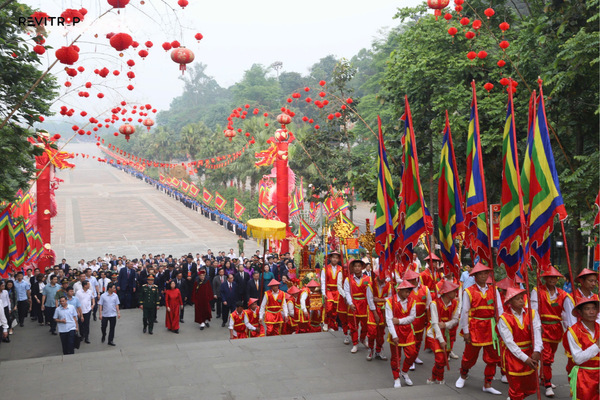
Both versions are valid. A quiet day lets you understand the site slowly. Festival season shows how deeply the Hung Kings remain present in Vietnamese cultural life. Choose based on your patience for crowds, your schedule, and the kind of memory you want to take from the visit.
How to Get to Hung Kings Temple From Hanoi
Hung Kings Temple is in Phu Tho Province, northwest of Hanoi. For most foreign travelers, the easiest way to visit is by private car or organized day trip. This gives you more control over timing and makes the day smoother, especially if you want to include the museum or stop in Viet Tri.
The trip can be done in one day from Hanoi if you leave early. It works best as a cultural day trip for travelers who have already seen Hanoi’s main landmarks and want to understand a deeper layer of northern Vietnam. During festival season, allow extra time because traffic and crowds can change the rhythm of the day.
Public transport may be possible, but it is less convenient if you want a comfortable visit. A private driver is usually the simplest option, especially for first-time travelers who do not want to manage transfers, waiting times, or local transport around the site.
What to Wear and How to Behave
Dress respectfully because Hung Kings Temple is an active worship site. Light, comfortable clothing is fine, especially in warm weather, but avoid outfits that feel too revealing for a temple setting. Comfortable walking shoes are important because the route includes steps, slopes, and outdoor paths.
Inside worship areas, keep your voice low and move gently. Do not stand in front of people making offerings, and avoid pushing into ceremonial spaces. If you take photos, be careful with angles and distance. Incense rituals, prayers, and offerings are meaningful to local visitors, not props for travel content.
A respectful visit does not need to feel stiff. Watch how Vietnamese visitors behave and follow the general rhythm. Pause when others pause. Step aside when someone is praying. Give the place enough quiet to speak for itself.
Is Hung Kings Temple Worth Visiting?
Hung Kings Temple is worth visiting if you want to understand Vietnam beyond its most photographed places. It is a site about ancestry, origin, and cultural memory. That makes it especially meaningful for travelers interested in history, identity, spirituality, and living traditions.
It may not be the best first stop for every visitor. If you have only a few days in northern Vietnam, Hanoi, Ninh Binh, and Ha Long Bay may feel more practical. But if your itinerary allows space for a cultural day trip, Hung Kings Temple offers something those places cannot fully give: a direct look at how Vietnam remembers its beginning.
The visit is strongest when approached slowly. Do not come only to tick off another heritage site. Come to walk the path, notice the incense, read the atmosphere, and understand why this mountain matters to so many Vietnamese people.
Suggested Half-Day Route
Arrive in the morning and begin with the main temple path. Walk upward through the lower, middle, and upper areas, pausing along the way instead of rushing straight to the top. The movement through the site matters as much as the final shrine.
After the temple walk, visit the Hung Kings Museum if you want more explanation. This is especially useful for foreign travelers, because the museum can help connect the legends and worship practices with the broader story of Vietnamese identity.
After the visit, you can have lunch in Viet Tri or return to Hanoi. If you visit during festival season, keep your plan loose. The crowds, ceremonies, and traffic may slow everything down, and that is part of the experience.
FAQ
Hung Kings Temple is located on Nghia Linh Mountain in Phu Tho Province, Vietnam. It is near Viet Tri City and can be visited as a day trip from Hanoi by private car or organized tour.
The Hung Kings Festival is linked with the 10th day of the third lunar month. The exact date changes each year because it follows the lunar calendar. During this time, the temple complex becomes much more crowded and ceremonial.
Yes. Hung Kings Temple can be visited from Hanoi as a day trip. A private car or arranged tour is the easiest option for most foreign travelers, especially if you want to visit the temple complex and museum comfortably.